
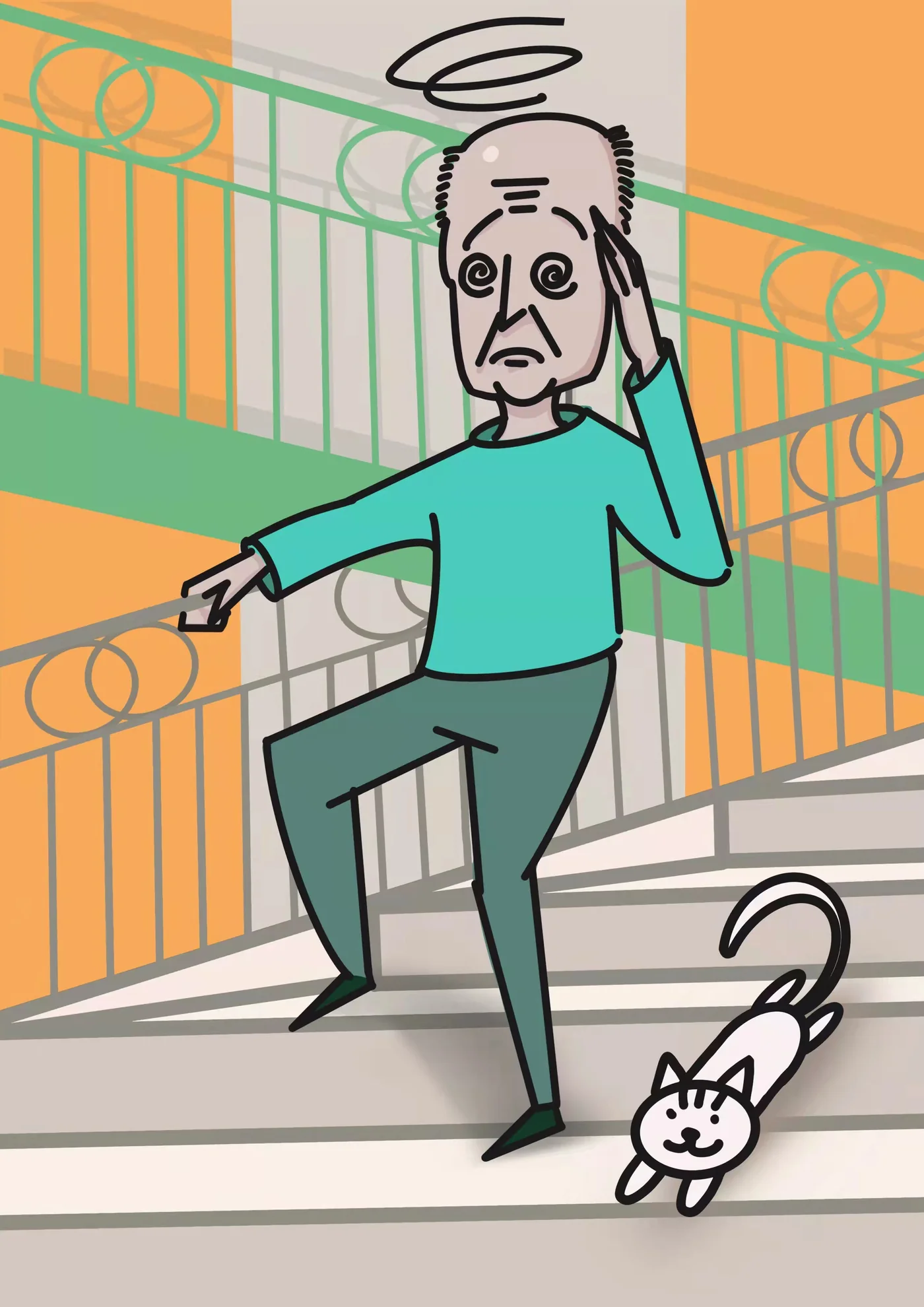
畫面定格一位老人扶欄上臺階的瞬間:一手扶欄杆、一手扶膝,神情專注,腳邊的白貓回頭張望。作品以簡潔線條呈現老年生活中的平衡與安全議題,也留下陪伴的暖意。
圖背後的故事
目的:估計空巢老年人的抑鬱症狀發生情況與生活質量,並考察相關影響因素。方法:該橫斷面研究於 2022 年 2 至 5 月進行,便利抽取成都市居住的 60 歲及以上空巢與非空巢老年人,使用 WHOQOL-BREF 評估生活質量,使用 15 項老年抑鬱量表評估抑鬱症狀,並用多變量 logistic 迴歸分析。結果:共納入 2,026 名參與者;摘要報告空巢老年人中有 660/1,082 人出現抑鬱症狀,同時將該比例寫爲 39.0%,兩者數值不一致,需按原文謹慎閱讀。年齡及患有兩種或以上慢性病與更高的抑鬱症狀風險相關,體育活動、身體健康、心理健康及生活質量總分與較低風險相關。結論:抑鬱症狀是空巢老年人常見的心理健康問題;年齡、兩種或以上慢性病及體育活動是相關重要因素,空巢老年人的生活質量評分較低。
論文摘要(中文譯文 · 原文)
中文譯文 摘要 目的 估計空巢老人抑鬱症狀與生活質量(QoL)的流行水平,並考察相關影響因素。方法 這是一項橫斷面研究,於2022年2月至5月開展,在成都市便利抽樣招募非空巢與空巢老年人(≥60歲)。採用 WHOQOL-BREF 量表評估生活質量,老年抑鬱量表(GDS-15)評估抑鬱症狀,採用多因素 logistic 迴歸分析各自變量與抑鬱症狀的關係。結果 共納入2026名受試者;空巢老人中39.0%(660/1082)存在抑鬱症狀。年齡(aOR 1.02,95% CI 1.00–1.04,P = 0.046)與慢性病≥2種(aOR 3.29,95% CI 2.50–4.33,P < 0.001)与抑郁症状风险升高相关;体力活动(aOR 0.59,95% CI 0.40–0.87,P = 0.008)、生理健康(aOR 0.93,95% CI 0.88–0.99,P = 0.026)、心理健康(aOR 0.93,95% CI 0.87–0.98,P = 0.013)及总分(aOR 0.97,95% CI 0.96–0.99,P < 0.001)与风险降低相关。结论 抑郁症状是空巢老人常见的心理健康问题;年龄、慢性病≥2种与体力活动是影响抑郁症状的重要因素,空巢老人的生活质量得分更低。关键词:空巢老人;生活质量;抑郁;心理健康;WHOQOL-BREF
Abstract Objectives To estimate the prevalence of depression symptoms and quality of life (QoL) and examined the influence of factors in the empty nest elderly. Methods This was a cross-sectional study, which was conducted from February 2022 to May 2022. We recruited a convenience sample of no empty-nest elderly and empty-nest elderly (≥60 years) living in Chengdu. QoL was assessed using WHOQOL-BREF, Geriatric Depression Scale (GDS-15) was used to assess depression symptoms. Multivariable logistic regression was used to analyze data between independent variables with depression symptoms. Results Two thousand twenty-six participants were included in this study, 39.0% (660/1,082) experienced depression symptoms among empty-nest elderly. Age (aOR, 1.02; 95% CI, 1.00–1.04; P = 0.046), chronic disease≥2 (aOR, 3.29; 95% CI, 2.50–4.33; P < 0.001) were associated with increased risk of depression symptoms, and physical activity (aOR, 0.59; 95% CI, 0.40–0.87; P = 0.008), physical health (aOR, 0.93; 95% CI, 0.88–0.99; P = 0.026), psychological health (aOR, 0.93; 95% CI, 0.87–0.98; P = 0.013), and total score (aOR, 0.97; 95% CI, 0.96–0.99; P < 0.001) were associated with decreased risk of depression symptoms among empty-nest elderly. Conclusions Depression symptoms are common mental health problems among empty-nest elderly. We found that age, chronic disease ≥2 and physical activity were important factors that have an impact on depressive symptoms. Empty-nest elderly would have lowered QoL score. Keywords: empty-nest elderly, quality of life, depression, mental health, WHOQOL-BREF