
Why study infant cries
Before speech, the cry is an infant's first language. Experienced paediatricians hear clues in it — hunger, discomfort, illness each sound different. The question: how does that experience become teachable, verifiable science?
Turning cries into data
The team's BMC Pediatrics study proposed and validated automatic time-label segmentation of infant cries: letting algorithms locate the start and end of each cry, replacing heavy manual annotation — the foundation of turning cries into data.
A concurrent narrative review mapped the physiology, pathology and analytical perspectives of infant cry — the first "map" of the field.
A window into development research
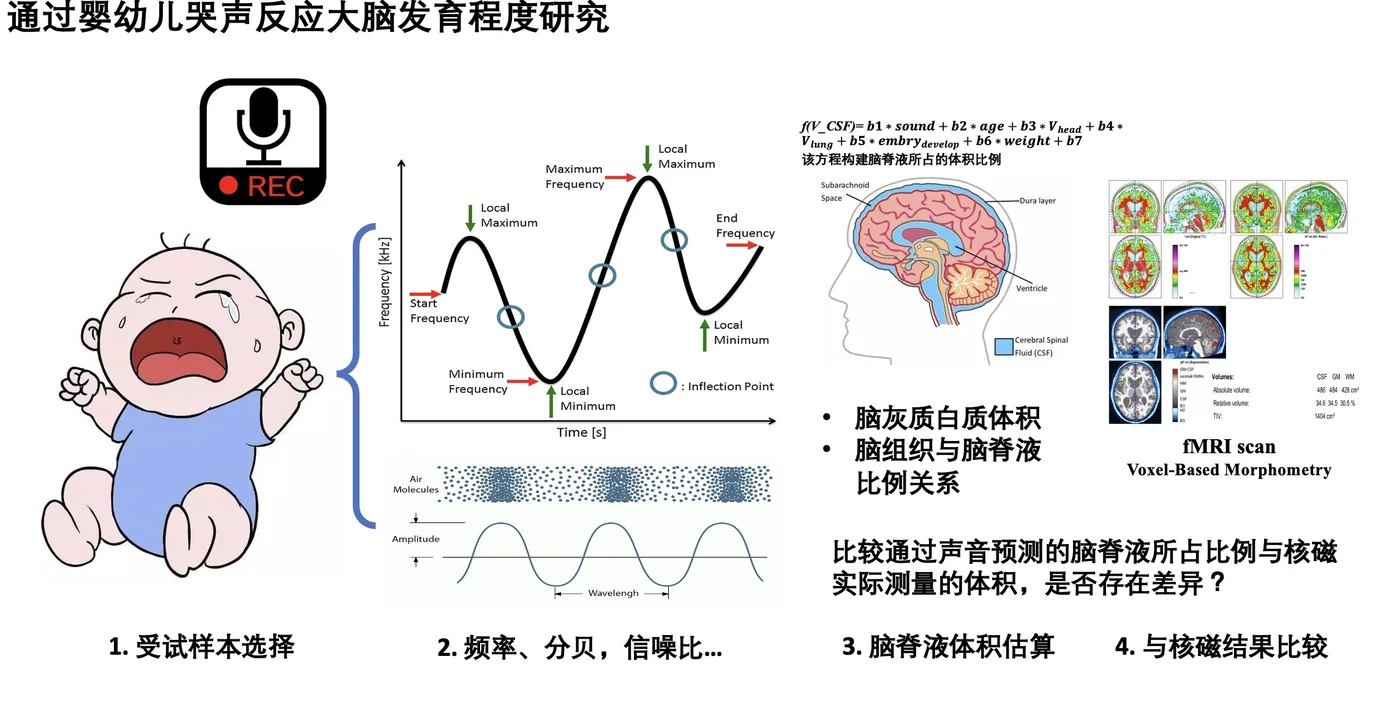
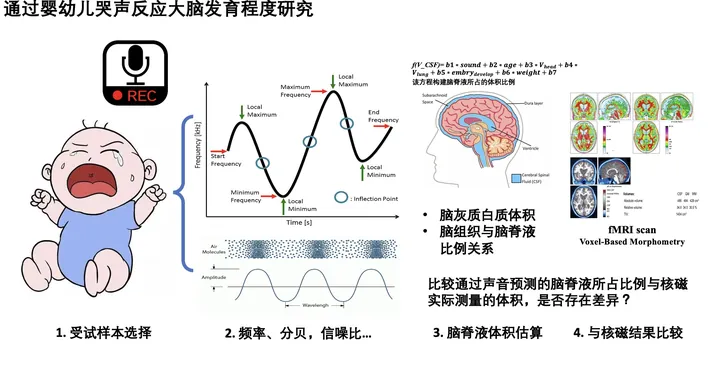
The flowchart in "Infant cry: a research window into brain development" depicts the next envisioned step: mapping cry features onto brain-imaging measures and asking whether they relate. The question "do differences exist?" is kept in the picture — research is still on the road, and the image records this stage honestly.
The evidence chain from a cry to brain development still needs more research; we are drawing the road first.
Works featured in this story
Research visual solutions
Science animation
Science animation
Related publications
- Construction and validation of an automated time label segmentation method for infant criesBMC Pediatrics · 2025 · doi.org/10.1186/s12887-025-06071-z
- The significance of an infant's cry: a narrative review of physiological, pathological, and analytical perspectivesFrontiers in Pediatrics · 2025 · doi.org/10.3389/fped.2025.1558951
Citations are compiled from the team CV; journal versions prevail. The scheme depicts a proposed flow, not validated conclusions.